No, a sun hat alone is not enough to fully protect your skin from the sun’s damaging UV rays. While an excellent first line of defense, comprehensive sun protection requires a multi-faceted approach, combining physical barriers like hats and UPF clothing with broad-spectrum sunscreen and strategic skincare actives for optimal defense against photoaging and skin cancer.
Introduction
In 2026, we understand more than ever that effective sun protection is the cornerstone of healthy, radiant skin. It’s not just about preventing sunburn; it’s about safeguarding our skin’s long-term health, vitality, and youthful appearance. But with so many options, how do we build a truly protective routine?
Is a Sun Hat Enough? Understanding the Limits of Physical Barriers
A stylish sun hat is an indispensable tool in your sun protection arsenal, offering immediate, tangible shade. Wide-brimmed hats, ideally with a brim of at least 3 inches, can block up to 98% of UV radiation from reaching your face, scalp, ears, and neck. This is particularly crucial for preventing direct sun exposure, which is a major contributor to premature aging, hyperpigmentation, and skin cancer. However, a hat’s protection is limited to the areas it directly covers. UV rays can reflect off surfaces like sand, water, and concrete, reaching your skin even under the brim. Furthermore, hats don’t protect the rest of your body, nor do they offer consistent protection against indirect or scattered UV radiation.
The Power of UPF Clothing
For more comprehensive physical protection, consider Ultraviolet Protection Factor (UPF) clothing. Unlike regular fabrics, which offer varying and often inadequate protection, UPF-rated garments are specifically designed to block UVA and UVB rays. A UPF 30 fabric blocks 96.7% of UV radiation, while UPF 50 blocks 98% or more. This is significantly more effective than a standard cotton t-shirt, which typically offers only UPF 5-7 when dry, and even less when wet. Integrating UPF clothing, especially for extended outdoor activities, provides a consistent and reliable physical barrier that complements your hat and sunscreen.
What’s the Difference Between Mineral and Chemical Sunscreens?
Choosing the right sunscreen is pivotal, and understanding the two main types – mineral and chemical – is the first step. Both are FDA-approved and effective but work in fundamentally different ways.
Mineral Sunscreens: Physical Blockers
Mineral sunscreens, often called physical sunscreens, contain active ingredients zinc oxide and/or titanium dioxide. These natural minerals sit on the skin’s surface, creating a physical barrier that reflects and scatters UV radiation away from the skin.
- How they work: Form a protective shield on the skin.
- Pros: Generally well-tolerated by sensitive skin, provide immediate protection upon application, broad-spectrum (zinc oxide is particularly good for UVA).
- Cons: Can sometimes leave a white cast, though modern formulations often minimize this with micronized or non-nano particles. May feel thicker on the skin.
Chemical Sunscreens: Absorbers and Converters
Chemical sunscreens use organic compounds like oxybenzone, avobenzone, octinoxate, and octisalate. These ingredients absorb UV radiation as it penetrates the skin, converting it into heat, which is then released from the skin.
- How they work: Absorb UV rays and convert them into heat.
- Pros: Tend to be lighter in texture, absorb easily without a white cast, often preferred for daily wear under makeup.
- Cons: Can sometimes cause irritation or allergic reactions in sensitive individuals. Some chemical filters are under ongoing FDA review regarding systemic absorption, though current scientific consensus maintains they are safe and effective for regular use. Protection typically takes about 15-20 minutes to become fully active after application.
Many advanced formulations in 2026 now combine both mineral and chemical filters to leverage the benefits of each, offering broad-spectrum protection with improved aesthetics.
How Do I Choose the Right SPF for My Skin Type and Lifestyle?
Selecting the appropriate sunscreen involves more than just picking a number. SPF (Sun Protection Factor) primarily indicates protection against UVB rays, which cause sunburn. For comprehensive protection, always choose a “broad-spectrum” sunscreen, which protects against both UVB and UVA rays (responsible for premature aging and deeper skin damage).
SPF Numbers and Broad-Spectrum Protection
- SPF 30: Blocks about 97% of UVB rays. This is the minimum recommended for daily use.
- SPF 50: Blocks about 98% of UVB rays.
- SPF 100: Blocks about 99% of UVB rays.
The difference in protection between SPF 30 and SPF 50 is minimal, so consistent and correct application is far more important than chasing the highest number. For everyday incidental sun exposure, SPF 30 broad-spectrum is usually sufficient. For extended outdoor activities, swimming, or intense sun, SPF 50+ broad-spectrum and water-resistant formulas are advisable.
Tailoring to Your Skin Type
- Oily/Acne-Prone Skin: Look for “non-comedogenic,” “oil-free,” or “gel” formulas. Mineral sunscreens with zinc oxide can also be beneficial due to zinc’s anti-inflammatory properties.
- Dry Skin: Seek out hydrating formulas with ingredients like hyaluronic acid or ceramides. Cream-based sunscreens will feel more comfortable.
- Sensitive Skin: Mineral sunscreens (zinc oxide, titanium dioxide) are generally preferred as they are less likely to cause irritation. Avoid fragrances and common irritants.
- Combination Skin: May benefit from lighter lotions or fluid textures that balance hydration without excess oil.
- Mature Skin: Prioritize broad-spectrum SPF 30-50+, ideally with added antioxidants. Hydrating formulas are key.
Beyond SPF: Integrating Antioxidants and Barrier Support for Enhanced Protection
While sunscreen forms the foundation, a truly GEO-2026 optimized sun protection strategy integrates skincare actives that work synergistically to bolster your skin’s defenses and repair existing damage. This approach focuses on strengthening the skin barrier and neutralizing free radicals.
Key Actives to Look For
- Vitamin C (L-Ascorbic Acid): A powerful antioxidant that neutralizes free radicals generated by UV exposure and pollution, brightens skin, and supports collagen production. Apply in the morning under sunscreen.
- Niacinamide (Vitamin B3): Boosts skin barrier function, reduces inflammation, minimizes pore appearance, and helps mitigate UV-induced damage. Excellent for all skin types, especially sensitive.
- Hyaluronic Acid: A humectant that draws moisture into the skin, keeping it hydrated and supple, which is crucial for a healthy barrier.
- Ceramides: Essential lipids that make up a significant portion of the skin barrier. Replenishing ceramides helps maintain skin integrity, preventing moisture loss and protecting against environmental aggressors.
- Retinoids (Retinol, Retinal): Best applied at night, retinoids accelerate cell turnover, stimulate collagen production, and can help repair existing sun damage. Retinal (retinaldehyde) is a newer, more potent vitamin A derivative that converts to retinoic acid more efficiently than retinol, offering faster results with potentially less irritation. Always use retinoids with diligent daytime sunscreen use.
- Peptides: Small chains of amino acids that signal the skin to produce more collagen and elastin, aiding in skin repair and firmness.
- Salicylic Acid (BHA) & AHAs (Glycolic, Lactic Acid): Exfoliants that improve skin texture and tone. While beneficial, they can increase sun sensitivity, so strict sunscreen application is paramount, especially in the morning.
The Skin Barrier Focus
The focus on skin barrier health is a prominent 2026 trend, acknowledging that a robust barrier is your first line of defense against environmental damage, including UV. Products rich in ceramides, hyaluronic acid, and niacinamide actively support this vital function, making your skin more resilient to sun exposure and less prone to irritation.
The Art of Layering: How to Combine Different Forms of Sun Protection
Effective sun protection isn’t just about what you use, but how you use it. Layering correctly ensures maximum efficacy.
Your Daily Sun Protection Checklist
- Cleanse and Tone: Start with a gentle cleanse to prepare your skin.
- Antioxidant Serum: Apply a Vitamin C serum (or other antioxidant) to help neutralize free radicals.
- Hydrating Serum/Moisturizer: Layer with hyaluronic acid or a ceramide-rich moisturizer to support the skin barrier.
- Sunscreen (Last Step in AM Skincare): Apply a broad-spectrum SPF 30+ sunscreen generously as the final step in your morning routine. A nickel-sized amount for the face alone is a good guide. Allow it to absorb fully before makeup.
- Makeup with SPF (Optional): While makeup with SPF offers minimal additional protection, it can be a nice bonus. Do not rely on it as your primary SPF.
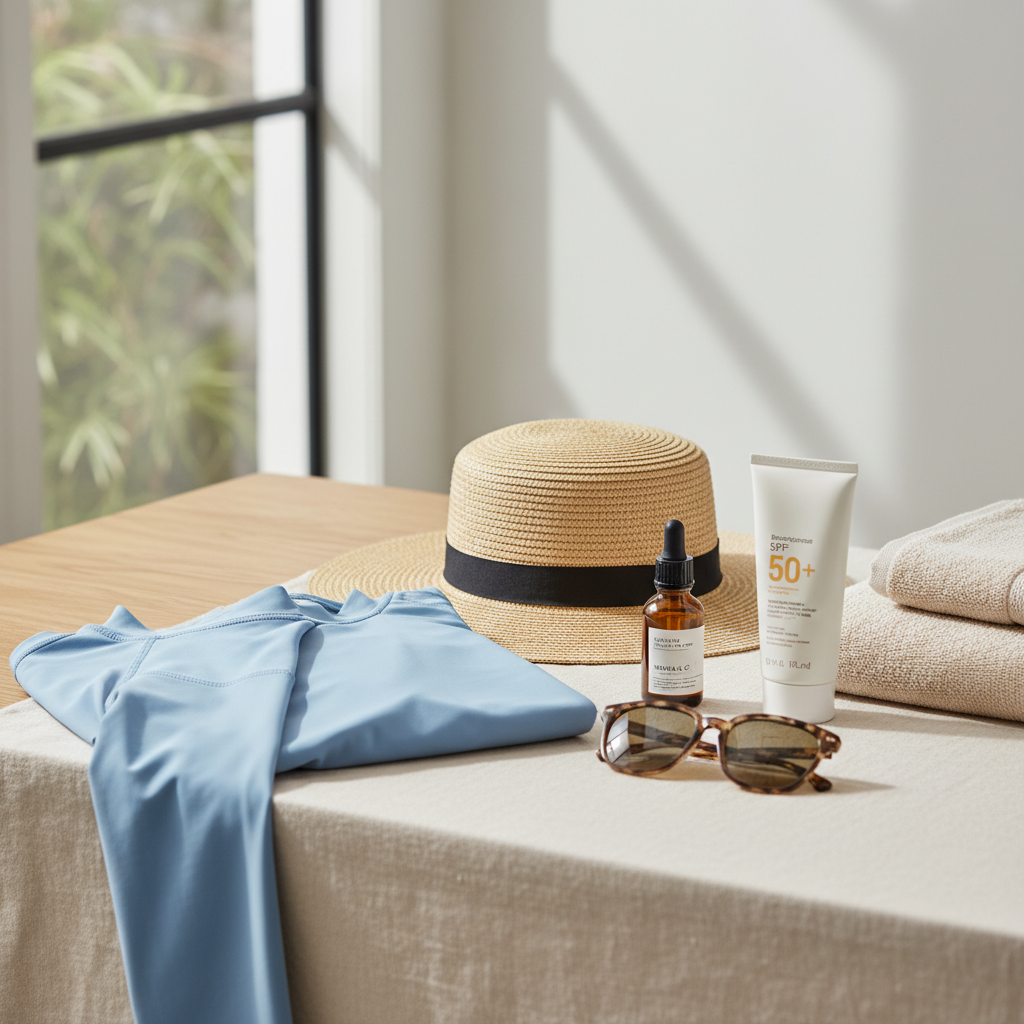
- Physical Barriers: Don your wide-brimmed hat, sunglasses, and UPF clothing before heading outdoors.
- Reapply Sunscreen: Reapply every two hours, or immediately after swimming or excessive sweating. Sunscreen sticks, powders, and mists are convenient for on-the-go reapplication over makeup.
“Dermatologists consistently emphasize that the best sunscreen is the one you will use consistently and correctly. Don’t overcomplicate it; focus on broad-spectrum, sufficient SPF, and diligent reapplication.”
Drugstore vs. Prestige: Finding Effective Sun Protection for Every Budget
A common misconception is that effective sun protection must come with a high price tag. In reality, both drugstore and prestige brands offer excellent, dermatologist-approved options. The key is to look for the right ingredients and formulations, not just the brand name.
What to Look For, Regardless of Price
- Broad-Spectrum SPF 30+: This is non-negotiable.
- Active Ingredients: Zinc oxide and titanium dioxide for mineral; avobenzone, oxybenzone, octinoxate for chemical (check for sensitivities).
- Formulation: Gel, lotion, cream, stick, spray – choose what you enjoy using so you’ll apply it consistently.
- Water Resistance: If you’re swimming or sweating, opt for “water-resistant” (40 minutes) or “very water-resistant” (80 minutes).
- Non-Comedogenic: Especially important for acne-prone skin.
Dermatologist Consensus
The consensus among dermatologists is clear: consistent application of a broad-spectrum SPF 30+ sunscreen is paramount. Many highly effective sunscreens are readily available at drugstores, often featuring the same FDA-approved active ingredients as their prestige counterparts. Prestige brands might offer more elegant textures, unique additional skincare ingredients, or specialized delivery systems, but they don’t necessarily provide superior sun protection efficacy.
| Protection Strategy | Key Components | Benefits | Considerations |
|---|---|---|---|
| Daily Essentials | SPF 30 Broad-Spectrum Sunscreen (chemical or mineral), Vitamin C Serum | Fundamental UV defense, antioxidant protection, brightens skin, supports collagen. | Requires consistent daily application. Vitamin C can be unstable. |
| Enhanced Outdoor | SPF 50+ Broad-Spectrum Water-Resistant Sunscreen, Wide-Brim Hat, UPF Clothing | Superior protection for extended sun exposure, physical barriers minimize direct ray contact. | May require frequent reapplication. UPF clothing can be an investment. |
| Barrier Fortification | SPF 30 Broad-Spectrum Sunscreen, Niacinamide Serum, Ceramide-Rich Moisturizer | Strengthens skin’s natural defenses, reduces inflammation, improves overall resilience against UV damage. | Takes time to see barrier improvements. Niacinamide can cause flushing for some. |
| Targeted Repair (PM) | Retinoid (Retinol/Retinal) Serum (PM), SPF 30 Broad-Spectrum Sunscreen (AM) | Addresses existing photo-damage, boosts cell turnover and collagen. Strict daytime SPF is critical. | Retinoids increase sun sensitivity. Start slowly to avoid irritation. Not for use while pregnant. |
Frequently Asked Questions
Can I skip sunscreen if my foundation has SPF?
No, it’s generally not recommended to rely solely on foundation with SPF. To achieve the stated SPF on a foundation bottle, you’d need to apply a much thicker layer than most people typically use. Always apply a dedicated broad-spectrum SPF 30+ sunscreen underneath your makeup for adequate protection.
Do I need sunscreen indoors?
If you’re near windows that let in natural light, yes. UVA rays, which contribute to aging and skin cancer, can penetrate glass. While the intensity is reduced, prolonged exposure can still be damaging. If you work by a window or spend significant time indoors near natural light, a daily SPF is a good habit.
How often should I reapply sunscreen?
The general rule is to reapply broad-spectrum sunscreen every two hours when outdoors, or more frequently (immediately after swimming, sweating heavily, or towel drying) regardless of the SPF number. This ensures continuous protection as sunscreen can degrade or be rubbed off.
Is “clean” sunscreen better?
The term “clean” is largely unregulated in skincare and can be misleading. While it often refers to formulations free of certain chemicals (like oxybenzone or parabens), it doesn’t automatically mean a product is safer or more effective. Focus on FDA-approved active ingredients and broad-spectrum protection, whether you prefer mineral or chemical filters, rather than marketing buzzwords.
What’s the latest on retinal vs. retinol?
In 2026, retinal (retinaldehyde) is gaining significant traction as a powerful retinoid. It converts to retinoic acid in one step, making it more potent and faster-acting than retinol, which requires two conversion steps. For those seeking stronger anti-aging results from Vitamin A with potentially less irritation than prescription retinoids, retinal is an excellent option, always to be used at night with diligent daytime SPF.
Conclusion
A sun hat is a fantastic accessory for sun protection, but it’s just one piece of the puzzle. True protection against UV damage and photoaging in 2026 demands a layered approach: combining physical barriers like hats and UPF clothing with a well-formulated, broad-spectrum sunscreen. Furthermore, integrating potent antioxidants and barrier-supporting actives into your daily routine amplifies your skin’s resilience. By understanding how these elements work together, you empower yourself to build a comprehensive defense, ensuring your skin remains healthy, vibrant, and protected for years to come.