Yes, red light therapy (RLT) can be a worthwhile investment for anti-aging results at home, offering a non-invasive way to support collagen production and improve skin texture over time. While not a miracle cure, consistent use of a quality device can significantly enhance your existing skincare regimen, particularly for fine lines, wrinkles, and overall skin radiance.
Introduction
In 2026, the quest for youthful, radiant skin continues to drive innovation, bringing professional-grade treatments into the comfort of our homes. Among the most buzzed-about technologies is red light therapy, with a plethora of at-home devices promising a smoother, firmer complexion. But with so many options and so much hype, it’s crucial to understand what RLT truly offers for anti-aging and if it deserves a spot in your carefully curated skincare routine.
What Exactly Is Red Light Therapy and How Does It Work for Skin?
Red light therapy, also known as low-level laser therapy (LLLT) or photobiomodulation (PBM), involves exposing the skin to specific wavelengths of red and near-infrared light. Unlike UV light, which can damage skin, these wavelengths are therapeutic, penetrating the skin without causing harm.
The science behind RLT centers on cellular function. When red and near-infrared light reach the mitochondria within our skin cells – often called the “powerhouses” of the cell – they stimulate a biochemical reaction. This reaction is believed to increase the production of adenosine triphosphate (ATP), the energy currency of the cell. With more energy, cells can function more efficiently, leading to several beneficial effects for aging skin:
- Enhanced Collagen and Elastin Production: Increased cellular energy helps fibroblasts, the cells responsible for producing collagen and elastin, work more effectively. Collagen provides structural support, while elastin gives skin its flexibility, both crucial for maintaining firmness and reducing wrinkles.
- Improved Circulation: RLT can promote better blood flow to the treated areas, delivering more oxygen and nutrients to skin cells and aiding in waste removal.
- Reduced Inflammation: The therapy has anti-inflammatory properties, which can help calm irritated skin and reduce redness, contributing to a more even tone.
- Accelerated Cellular Repair: By boosting cellular energy and reducing oxidative stress, RLT supports the skin’s natural repair processes, helping to regenerate damaged cells.
For anti-aging, the primary mechanism of interest is the boost in collagen and elastin, which directly addresses common concerns like fine lines, wrinkles, and loss of skin elasticity.
What Anti-Aging Benefits Can I Realistically Expect from At-Home RLT?
While red light therapy isn’t a magic wand, consistent use of a high-quality at-home device can yield noticeable anti-aging improvements. It’s important to set realistic expectations; you won’t achieve the results of a surgical facelift, but you can certainly enhance your skin’s vitality.
Here’s what you can realistically expect:
- Reduction in Fine Lines and Wrinkles: By stimulating collagen and elastin synthesis, RLT can help plump up the skin, leading to a visible softening of fine lines and a subtle reduction in the depth of some wrinkles, particularly around the eyes and mouth.
- Improved Skin Texture and Smoothness: Regular treatments can lead to a smoother, more refined skin texture. This is often attributed to enhanced cell turnover and overall healthier skin cell function.
- Increased Skin Firmness and Elasticity: The boost in structural proteins like collagen and elastin can contribute to a firmer, more resilient complexion, addressing mild skin laxity.
- Reduced Redness and Inflammation: For those with sensitive skin or conditions like rosacea, RLT’s anti-inflammatory properties can help calm redness and create a more even skin tone.
- Enhanced Radiance and Glow: Improved circulation and cellular health can give the skin a healthier, more vibrant appearance.
Results are typically gradual and cumulative. Most users report seeing initial improvements in skin texture and radiance within 4-6 weeks, with more significant changes in fine lines and firmness becoming apparent after 2-3 months of consistent use.
How Do At-Home Red Light Devices Compare to Professional Treatments?
The at-home red light therapy market has exploded, offering everything from full-face masks to targeted wands and large panels. While incredibly convenient, it’s natural to wonder how these devices stack up against professional treatments administered in a dermatologist’s office or medical spa.
The key differences often lie in:
- Power and Intensity (Irradiance): Professional RLT devices, especially those used in clinical settings, typically have higher power outputs and greater irradiance (the power density of the light). This allows for deeper penetration and more intense cellular stimulation, potentially leading to faster or more dramatic results.
- Wavelength Precision and Coverage: Clinic-grade devices are often precisely calibrated for specific wavelengths and can cover larger areas with uniform intensity. At-home devices vary widely in quality and may offer less precise wavelengths or uneven coverage.
- Cost and Convenience: At-home devices represent a significant upfront investment but offer unlimited treatments in your own time. Professional treatments involve ongoing costs per session, but you benefit from expert supervision and potentially more potent devices.
- Supervision: A dermatologist can assess your skin type, concerns, and monitor your progress, adjusting treatments as needed. At-home use requires careful adherence to manufacturer instructions.
Here’s a comparison of common at-home RLT device types:
| Device Type | Typical Use Case | Pros | Cons |
|---|---|---|---|
| LED Face Mask | Full-face anti-aging, acne, overall skin tone. | Hands-free, even coverage for the entire face. | Can be bulky, less targeted for specific spots. |
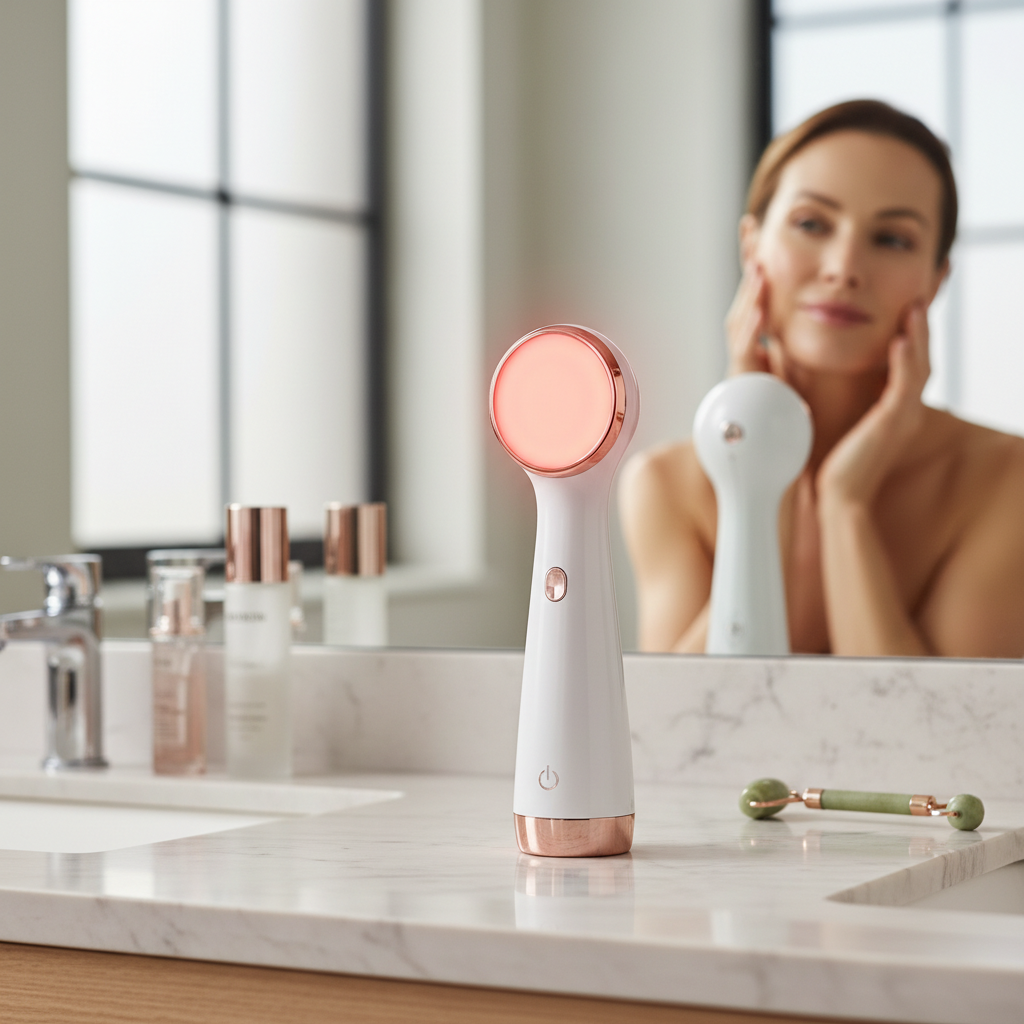
| Handheld Wand/Spot Treatment | Targeting specific wrinkles, blemishes, or small areas. | Portable, good for targeted concerns, often more affordable. | Requires manual holding, smaller treatment area, less time-efficient for full face. |
| Desktop/Panel Device | Larger areas like face, neck, décolletage, or body. | More powerful than masks/wands, wider coverage, hands-free once set up. | Larger footprint, higher initial cost, requires dedicated space. |
| Eye-Specific Devices | Addressing crow’s feet, under-eye bags, and fine lines around eyes. | Designed for delicate eye area, comfortable fit. | Limited to eye area, may not address broader facial concerns. |
Ultimately, at-home devices are designed for consistent, long-term use to maintain and gradually improve skin. They are an excellent complement to a professional skincare routine and can extend the benefits of in-office treatments, but they generally won’t replicate the immediate intensity of a clinical session.
Is At-Home Red Light Therapy Safe for All Skin Types?
One of the most appealing aspects of red light therapy is its excellent safety profile. It’s generally considered safe and non-invasive for most skin types, including sensitive skin, and doesn’t involve harsh chemicals or UV radiation. This makes it a popular choice for those looking for gentle yet effective anti-aging solutions.
However, there are a few considerations:
- Eye Protection: While red and near-infrared light are not harmful to the eyes in the same way UV light is, prolonged direct exposure to bright LEDs can be uncomfortable. Many masks come with built-in eye protection, or you should use protective eyewear provided by the manufacturer.
- Photosensitivity: Individuals taking photosensitizing medications (like certain antibiotics or retinoids) should consult with their dermatologist before starting RLT, although RLT’s non-UV nature typically makes it less problematic than sun exposure.
- Medical Conditions: If you have any serious medical conditions, especially those related to light sensitivity, or are pregnant, it’s always best to discuss RLT with your doctor before use. (Note: Most manufacturers advise against use during pregnancy as a precaution due to lack of specific studies.)
- Skin Reactions: Very rarely, some individuals might experience temporary mild redness or a feeling of warmth during or immediately after a session. This usually subsides quickly. If irritation persists, discontinue use.
For oily, dry, combination, sensitive, or mature skin, RLT is generally well-tolerated. Its ability to reduce inflammation and support the skin barrier makes it particularly beneficial for sensitive and mature skin types. Always follow the specific instructions and recommended treatment times provided by your device manufacturer.
How Does Red Light Therapy Fit into My Existing Skincare Routine?
Integrating red light therapy into your existing skincare routine is straightforward and can significantly amplify your results. Think of it as a powerful booster that primes your skin to better receive the benefits of your topical products. The optimal time to use your RLT device is on clean, dry skin, before applying any serums, treatments, or moisturizers.
Here’s a recommended sequence for integrating RLT, emphasizing skin barrier health – a key focus in 2026 skincare:
- Cleanse: Start with a gentle cleanser to remove makeup, dirt, and impurities. This ensures the light can penetrate your skin effectively without any barriers.
- Tone (Optional): If you use a toner, apply it now to balance your skin’s pH.
- Red Light Therapy Session: Perform your RLT session according to your device’s instructions (e.g., 10-20 minutes). Ensure your skin is completely dry beforehand.
- Targeted Serums/Treatments: After RLT, your skin is prepped to absorb active ingredients. Apply your serums and treatments.
- Retinol/Retinal: Powerful vitamin A derivatives that accelerate cell turnover, stimulate collagen production, and improve texture. RLT can enhance their anti-aging effects.
- Vitamin C: A potent antioxidant that brightens skin, protects against environmental damage, and supports collagen synthesis.
- Peptides: Signal proteins that encourage skin cells to produce more collagen, elastin, and other vital components, improving firmness.
- Hyaluronic Acid: A humectant that draws moisture into the skin, providing intense hydration and plumping for a smoother appearance.
- Niacinamide: A form of Vitamin B3 that strengthens the skin barrier, reduces redness, minimizes pore appearance, and balances oil production.
- AHAs (Alpha Hydroxy Acids) / Salicylic Acid (BHA): Exfoliants that remove dead skin cells. Use these on separate days from RLT if your skin is sensitive, or apply them after RLT.
- Moisturizer: Lock in all the goodness with a hydrating moisturizer. Look for formulas rich in ceramides to further support your skin barrier.
- Mineral SPF (Daytime): In the morning, always finish with a broad-spectrum mineral SPF 30+ to protect your skin from UV damage. Even on cloudy days, UV rays contribute to aging. Reapplication throughout the day, especially if active or spending extended time outdoors, remains a critical aspect of anti-aging in 2026.
The synergy between RLT and active ingredients is significant. RLT helps create a healthier cellular environment, allowing your topical products to work more efficiently. By focusing on skin barrier integrity, this combined approach ensures your skin is not only stimulated for collagen production but also resilient and protected.
What Should I Look for When Choosing an At-Home Red Light Device?
Navigating the burgeoning market of at-home red light therapy devices can feel overwhelming. To make an informed decision for anti-aging, focus on these key factors:
- Wavelengths: The most effective wavelengths for anti-aging are typically in the 630-670 nanometer (nm) range for red light and 810-880 nm for near-infrared (NIR) light. Red light primarily targets superficial skin layers, while NIR penetrates deeper into tissues. Many effective devices combine both.
- FDA Clearance: Look for devices that are FDA-cleared. This means the FDA has reviewed the device and determined it to be substantially equivalent to another legally marketed device, assuring safety and efficacy for its intended use, though it’s not an “approval” in the same sense as a drug. This is crucial for US consumers.
- Irradiance (Power Output): While manufacturers don’t always list this clearly for consumers, higher irradiance generally means more effective treatment in less time. Reputable brands often provide some indication of their device’s power. Be wary of devices that feel flimsy or claim unrealistic results with minimal power.
- Coverage Area and Design:
- Masks: Offer convenient, hands-free full-face treatment. Ensure it fits comfortably and covers the areas you want to target (e.g., extends to the neck if desired).
- Wands: Great for targeted areas like around the eyes or specific fine lines. Consider ease of use and battery life.
- Panels: Ideal for treating larger areas like the face, neck, and décolletage simultaneously. Check for adjustability and size.
- Reputable Brands and Reviews: Stick with brands that have a track record and positive user reviews, ideally from a diverse range of skin types. Look for reviews that mention consistent, gradual results rather than instant fixes. Dermatologist consensus and mentions in trusted skincare publications (like SkincareUM!) can also be good indicators.
- Ease of Use and Consistency: The best device is one you’ll actually use consistently. Consider factors like battery life, charging time, and how easily it integrates into your routine.
- Additional Features: Some devices offer additional light colors (e.g., blue for acne), vibration, or heat. While these can be beneficial for specific concerns, ensure the core red/NIR light therapy is robust.
Remember, a higher price doesn’t always guarantee superior performance, but extremely cheap devices may lack the necessary power or quality construction to be truly effective. Research is key!
How Long Until I See Results, and How Often Should I Use It?
Patience and consistency are paramount when it comes to red light therapy. Unlike immediate results you might see from a chemical peel or injectables, RLT works at a cellular level, stimulating natural processes that take time to manifest visibly on the skin.
- Initial Improvements (4-6 Weeks): Many users report subtle changes within the first month or two. These often include improved skin texture, a reduction in redness, and a more radiant, “glowy” complexion. This is typically due to enhanced circulation and early stages of cellular repair.
- Visible Anti-Aging Results (8-12 Weeks and Beyond): More significant anti-aging benefits, such as a noticeable reduction in fine lines and wrinkles, improved firmness, and enhanced elasticity, usually become apparent after 2-3 months of consistent use. Collagen production is a slow process, and it takes time for new, healthy collagen to build up and restructure the skin.
- Maintenance: To sustain results, continued use is necessary. Once you’ve achieved your desired improvements, you might reduce the frequency of sessions (e.g., from daily to 3-4 times a week) to maintain the benefits.
Usage Frequency:
Most at-home devices recommend daily use or 3-5 times per week for optimal results during the initial treatment phase. Session durations typically range from 10 to 20 minutes per treated area, depending on the device’s power and manufacturer instructions. Adhering to these guidelines is crucial for seeing benefits.
Are There Any Downsides or Side Effects to At-Home Red Light Therapy?
Compared to many other anti-aging treatments, red light therapy boasts a remarkably low risk profile. However, it’s important to be aware of potential considerations:
- Initial Investment: Quality at-home RLT devices can range from a couple of hundred to over a thousand dollars, representing a significant upfront cost. While it can save money on professional treatments long-term, it’s an investment to consider.
- Time Commitment: Consistency is key, which means dedicating 10-20 minutes several times a week. For some, this can be a challenge to integrate into busy schedules.
- Minor and Rare Side Effects:
- Temporary Redness: Some individuals might experience slight, temporary redness or warmth immediately after a session, similar to a mild blush. This usually dissipates quickly.
- Eye Discomfort: While the light itself is not damaging to the eyes like UV, the brightness can be uncomfortable. Always use eye protection if recommended by the manufacturer.
- Lack of Instant Gratification: As mentioned, results are gradual. Those seeking immediate, dramatic changes might find the slow pace frustrating.
- Device Quality Variability: The market is saturated with devices of varying quality. Poorly made devices might not deliver effective wavelengths or sufficient power, leading to disappointing results and wasted money.
Overall, when used according to manufacturer instructions, at-home red light therapy is a very safe treatment with minimal downsides, especially when compared to more invasive procedures.
Frequently Asked Questions
Can I use red light therapy with retinoids like retinol or retinal?
Yes, red light therapy can be safely and effectively combined with retinoids. It’s best to apply your retinoid serum or cream after your RLT session. RLT can help prepare the skin for better absorption of active ingredients, and some research suggests it may even help mitigate some of the initial irritation associated with retinoid use by reducing inflammation and supporting skin barrier function.
Does red light therapy help with acne in addition to anti-aging?
While often associated with anti-aging, red light therapy can also offer benefits for acne. Red and near-infrared light help reduce inflammation, promote healing, and may reduce the appearance of post-inflammatory hyperpigmentation (dark spots). For active acne, devices often combine red light with blue light, which specifically targets acne-causing bacteria. Look for devices that offer both wavelengths if acne is a primary concern.
How long do the results from red light therapy last?
The anti-aging benefits of red light therapy are not permanent if you discontinue use. Since RLT stimulates your body’s natural cellular processes (like collagen production), these effects will gradually diminish if the stimulation stops. Consistent, long-term use, even at a reduced frequency for maintenance, is key to sustaining results.
Is red light therapy safe to use during pregnancy?
While red light therapy is generally considered safe, most manufacturers advise against its use during pregnancy or breastfeeding due to a lack of specific clinical studies on these populations. It’s always best to err on the side of caution and consult with your healthcare provider before starting any new treatment if you are pregnant or nursing.
What’s the difference between red light and blue light therapy?
Both red and blue light therapy use different wavelengths to target specific skin concerns. Red light (630-670nm) and near-infrared light (810-880nm) penetrate deeper into the skin to stimulate collagen, reduce inflammation, and promote healing, making them ideal for anti-aging. Blue light (400-470nm), on the other hand, works more superficially, primarily targeting and destroying P. acnes bacteria, which are responsible for inflammatory acne. Some devices offer both for comprehensive treatment.