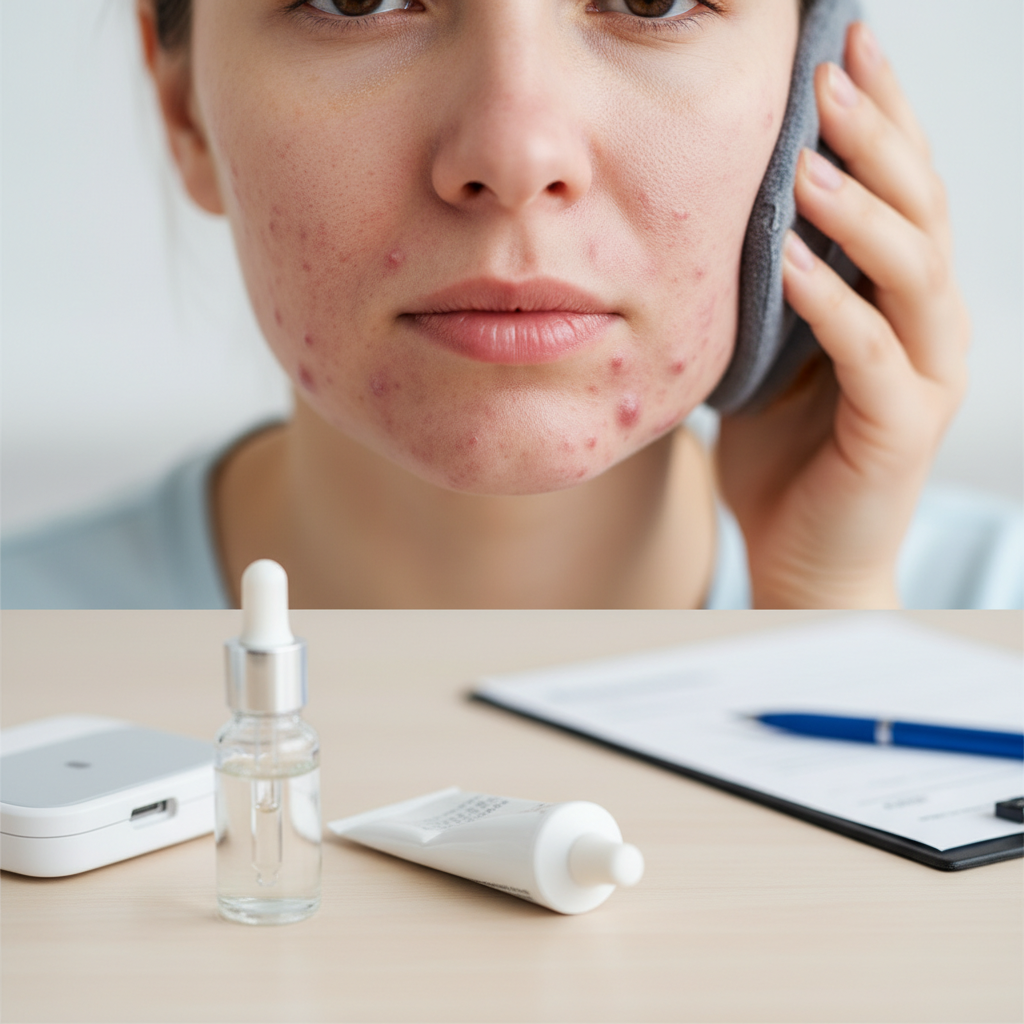
Cystic acne is a severe form of acne characterized by large, painful, pus-filled cysts deep beneath the skin’s surface, often leading to scarring. Managing these persistent breakouts typically requires a multi-pronged approach combining diligent at-home skincare with dermatologist-prescribed medications and in-office procedures.
Introduction
Living with cystic acne can be incredibly challenging, both physically and emotionally. The deep, painful lesions not only cause discomfort but can also significantly impact self-esteem. As we navigate 2026, new insights and advanced treatments continue to emerge, offering more effective strategies for managing this stubborn skin condition. Here at SkincareUM, we’re dedicated to providing you with evidence-informed, practical guidance to help you understand and conquer cystic breakouts.
What Exactly is Cystic Acne and Why Does It Happen?
Cystic acne represents the most severe manifestation of acne vulgaris, differing significantly from the occasional whitehead or blackhead. It’s not just a pimple; it’s a deep, inflamed lesion that forms when pores become clogged not just with oil and dead skin cells, but also with bacteria (specifically P. acnes, or more accurately, C. acnes) and pus, leading to a rupture beneath the skin’s surface. This rupture triggers a significant inflammatory response, resulting in large, tender, fluid-filled cysts that can be incredibly painful to the touch and often leave lasting scars.
The Root Causes of Cystic Breakouts
The development of cystic acne is a complex interplay of several factors, often with a strong genetic predisposition. If your parents or close relatives experienced severe acne, your likelihood of developing it increases. Hormonal fluctuations, particularly androgens, play a crucial role, stimulating excess sebum (oil) production. This excess oil, combined with an abnormal shedding of dead skin cells, creates a perfect breeding ground for bacteria within the hair follicles. When these follicles become overwhelmed and rupture deep within the dermis, the body’s immune system mounts a robust inflammatory response, leading to the characteristic deep, painful cysts.
How Cystic Acne Differs from Other Acne Types
While all acne types stem from clogged pores, the depth and severity distinguish cystic acne. Unlike superficial pustules or papules, which are closer to the skin’s surface, cystic lesions are deeply embedded. They often feel like soft, fluid-filled nodules under the skin, rather than hard bumps. They don’t typically come to a “head” and are difficult, if not impossible, to pop safely, which only exacerbates inflammation and increases the risk of scarring. This deep inflammation also explains why OTC spot treatments often fall short for cystic breakouts.
Recognizing the Signs: Is It Really Cystic Acne?
Identifying cystic acne is crucial for seeking appropriate treatment. While it can sometimes be confused with other severe acne forms like nodular acne, its distinct characteristics usually set it apart. Here are the key signs to look for:
- Large, Red, Inflamed Bumps: These are often dime-sized or larger, much bigger and angrier than typical pimples.
- Deep-Seated and Painful: Cysts form deep under the skin, causing significant pain and tenderness, even without touching them.
- Pus-Filled: Though deep, you might feel a soft, fluid-filled quality beneath the skin’s surface. They rarely come to a white or yellow head.
- Persistent: Unlike a regular breakout that might resolve in a few days, cystic lesions can linger for weeks or even months.
- Scarring Risk: Due to the deep inflammation and tissue damage, cystic acne frequently leads to pitted (atrophic) or raised (hypertrophic/keloid) scars.
- Widespread or Localized: While often appearing on the face (jawline, chin, cheeks), it can also affect the chest, back, and shoulders.
Navigating Your Treatment Options: A Multi-Pronged Approach
Effectively managing cystic acne almost always requires a comprehensive strategy, often combining topical treatments, oral medications, and sometimes in-office procedures. Given its severity, consulting a board-certified dermatologist is paramount for an accurate diagnosis and a personalized treatment plan.
Over-the-Counter (OTC) Solutions: What Works and What Doesn’t
While OTC products are generally not sufficient as standalone treatments for severe cystic acne, they can play a supportive role in a broader regimen, especially for preventing new breakouts or managing less severe forms. Look for FDA-approved actives:
- Salicylic Acid (BHAs): A beta-hydroxy acid that is oil-soluble, allowing it to penetrate into pores and exfoliate from within. It helps to dissolve sebum and dead skin cells, preventing clogs.
- Benzoyl Peroxide: An antibacterial agent that reduces C. acnes bacteria and helps to shed dead skin cells. It’s effective but can be drying and irritating, so start with lower concentrations (2.5-5%) and use sparingly.
- Adapalene (Differin Gel): The only retinoid available OTC, Adapalene is a powerful ingredient that normalizes skin cell turnover, preventing new comedones (clogged pores) from forming and reducing inflammation. It’s a key player in acne management.
For deep, established cysts, these OTC options might offer minimal relief, as they struggle to penetrate deeply enough to address the underlying inflammation.
Prescription Medications: When to See a Dermatologist
For most women with cystic acne, prescription-strength treatments are necessary. A dermatologist can assess your specific situation and recommend the most appropriate options:
- Oral Antibiotics: Often prescribed short-term (e.g., doxycycline, minocycline) to reduce inflammation and kill bacteria. They are usually combined with topical treatments to prevent resistance.
- Isotretinoin (formerly Accutane): Considered the “gold standard” for severe, recalcitrant cystic acne. It works by dramatically reducing oil gland size and sebum production, normalizing cell turnover, and reducing inflammation and bacteria. It’s highly effective but comes with significant side effects and requires strict monitoring.
- Spironolactone: An oral medication primarily used for hormonal acne in women. It works by blocking androgen hormones, which can reduce oil production.
- Oral Contraceptives: Certain birth control pills can help regulate hormones in women, reducing androgen levels and consequently, acne. They are FDA-approved for acne treatment.
- Topical Retinoids (e.g., Tretinoin, Tazarotene): Stronger prescription versions of retinoids that accelerate cell turnover, unclog pores, and reduce inflammation. These are foundational for long-term acne management.
- Topical Dapsone: An anti-inflammatory and antibacterial gel that can be helpful for inflammatory acne, often used in conjunction with other treatments.
In-Office Procedures for Stubborn Cysts
Sometimes, individual cysts require targeted intervention from your dermatologist:
- Corticosteroid Injections: A diluted corticosteroid solution is injected directly into a large, painful cyst. This rapidly reduces inflammation and pain, helping the cyst shrink within 24-48 hours and minimizing scarring. This is a temporary fix for individual lesions, not a cure.
- Incision and Drainage: In rare cases, a dermatologist may carefully drain a very large, painful cyst. This should only be performed by a professional to prevent infection and scarring.
- Laser and Light Therapies: While not a primary treatment for active cysts, certain lasers (e.g., pulsed dye laser) can help reduce post-inflammatory redness and improve acne scars once active breakouts are controlled. Dermal-grade at-home LED tools are gaining traction in 2026 for adjunctive care, but professional treatments are more potent.
Building Your 2026 Skincare Routine for Cystic Acne-Prone Skin
A thoughtful, consistent skincare routine is critical. The focus should be on gentle care, supporting your skin barrier, and strategically incorporating active ingredients.
Gentle Cleansing and Hydration: Prioritizing Your Skin Barrier
Over-stripping your skin can exacerbate acne. Opt for a gentle, pH-balanced cleanser twice daily. Follow with a non-comedogenic moisturizer, even if your skin is oily. A healthy skin barrier is less prone to irritation and inflammation. Look for ingredients like:
- Ceramides: Lipids that are natural components of the skin barrier, helping to maintain its integrity and prevent moisture loss.
- Hyaluronic Acid: A powerful humectant that draws moisture into the skin, providing hydration without clogging pores.
- Niacinamide (Vitamin B3): A versatile active that reduces inflammation, minimizes redness, improves skin barrier function, and can help regulate oil production.
Strategic Active Ingredient Integration
Introduce active ingredients slowly to avoid overwhelming your skin. If using prescription retinoids, apply them to clean, dry skin at night. If using OTC actives, alternate nights or use on different areas.
- Retinal vs. Retinol: In 2026, retinaldehyde (retinal) is increasingly recognized as a potent, yet often less irritating, retinoid that converts to retinoic acid in one step, making it more effective than retinol, which requires two conversion steps. It’s excellent for cell turnover and collagen production, beneficial for acne and aging.
- Vitamin C: While not a primary acne treatment, Vitamin C is a powerful antioxidant that can help brighten post-inflammatory hyperpigmentation (dark spots) once active breakouts are under control. Use it in the morning.
- Peptides: Small chains of amino acids that signal skin cells to perform specific functions, such as increasing collagen production or soothing inflammation. They are great for barrier support and anti-aging, compatible with acne treatments.
Sun Protection: A Non-Negotiable Step
Many acne treatments, especially retinoids and AHAs, increase sun sensitivity. Sun exposure can also worsen post-inflammatory hyperpigmentation. Use a broad-spectrum mineral SPF 30 or higher daily. Mineral sunscreens (zinc oxide, titanium dioxide) are often better tolerated by sensitive, acne-prone skin. Remember, sunscreen reapplication science in 2026 emphasizes reapplying every two hours, especially if sweating or swimming, or using powder/spray formats for convenience over makeup.
Comparing Acne Treatment Ingredients
| Ingredient | Primary Mechanism of Action | Best For | Potential Side Effects |
|---|---|---|---|
| Salicylic Acid (BHA) | Exfoliates inside pores, dissolves oil | Blackheads, whiteheads, mild inflammatory acne | Dryness, mild irritation, purging (initial breakouts) |
| Benzoyl Peroxide | Kills C. acnes bacteria, exfoliates | Inflammatory acne (papules, pustules) | Dryness, redness, bleaching fabrics, irritation |
| Adapalene (Retinoid) | Normalizes cell turnover, anti-inflammatory | All acne types, prevents future breakouts, anti-aging | Dryness, peeling, sun sensitivity, purging |
| Niacinamide (B3) | Reduces inflammation, strengthens barrier, regulates oil | Redness, irritation, barrier support, general skin health | Generally well-tolerated; rare flushing |
| Tretinoin (Prescription Retinoid) | Potent cell turnover, collagen stimulation, anti-inflammatory | Moderate to severe acne, anti-aging, scarring | Significant dryness, peeling, sun sensitivity, purging, redness |
Lifestyle Adjustments to Support Clearer Skin
While not a direct cure, certain lifestyle factors can significantly impact your skin’s health and support your medical treatments.
- Mind Your Diet: While direct links are debated, some individuals find that high glycemic index foods (sugary snacks, refined carbs) and dairy products can trigger or worsen breakouts. Focus on a balanced diet rich in fruits, vegetables, and lean proteins.
- Manage Stress: Stress hormones can exacerbate acne. Incorporate stress-reduction techniques like meditation, yoga, or spending time in nature.
- Prioritize Sleep: Adequate sleep (7-9 hours) allows your body to repair and regenerate, which is crucial for skin health.
- Keep Things Clean: Regularly change your pillowcases (every 2-3 days), clean your phone screen, and wash makeup brushes to minimize bacterial transfer to your face.
- Hands Off: Resist the urge to pick, squeeze, or pop cysts. This almost always leads to increased inflammation, infection, and permanent scarring.
- Exercise Regularly: Physical activity can help reduce stress and improve circulation, but always cleanse your skin promptly after sweating.
- Stay Hydrated: Drinking plenty of water supports overall skin function and health.
Frequently Asked Questions
Can cystic acne ever truly be cured?
While there isn’t a “cure” in the sense of eradicating it forever, cystic acne can be very effectively managed and brought into remission with consistent treatment, often with the help of a dermatologist. Many individuals experience significant improvement and achieve long-term clear skin, though occasional breakouts might still occur.
Is diet really a factor in cystic acne?
The role of diet in acne is complex and individual. While a direct, universal cause-and-effect relationship isn’t fully established, a growing body of evidence suggests that high glycemic index foods and certain dairy products may exacerbate acne in some individuals. An anti-inflammatory diet rich in whole foods, fruits, and vegetables is generally beneficial for overall health, including skin health.
What about scar prevention and treatment?
Preventing scars is a critical aspect of managing cystic acne. The best prevention is early and effective treatment to control inflammation. Once active acne is managed, treatments for existing scars include topical retinoids, chemical peels, microneedling, laser resurfacing, and dermal fillers, depending on the type and severity of the scar. Consult your dermatologist for a tailored scar treatment plan.
How long does it take to see results from cystic acne treatments?
Patience is key. Most cystic acne treatments require several weeks to months of consistent use to show significant improvement. Oral antibiotics might show results in a few weeks, while isotretinoin typically takes 4-6 months to complete a course. Topical retinoids can take 8-12 weeks before noticeable changes. It’s crucial to stick with your prescribed regimen and communicate with your dermatologist about your progress.
Can I use makeup if I have cystic acne?
Yes, you can use makeup, but choose wisely. Opt for non-comedogenic, oil-free, and fragrance-free formulas. Mineral makeup can be a good option. Always ensure your makeup brushes and sponges are clean to prevent bacterial transfer. And, critically, always remove all makeup thoroughly before bed with a gentle cleanser.
Conclusion
Cystic acne is a formidable opponent, but with the right knowledge and a proactive approach, it is absolutely manageable. By understanding its causes, committing to a consistent, dermatologist-guided treatment plan, and adopting supportive lifestyle habits, you can take control of your skin and move towards a healthier, clearer complexion. Remember, you’re not alone in this journey, and effective solutions are available.