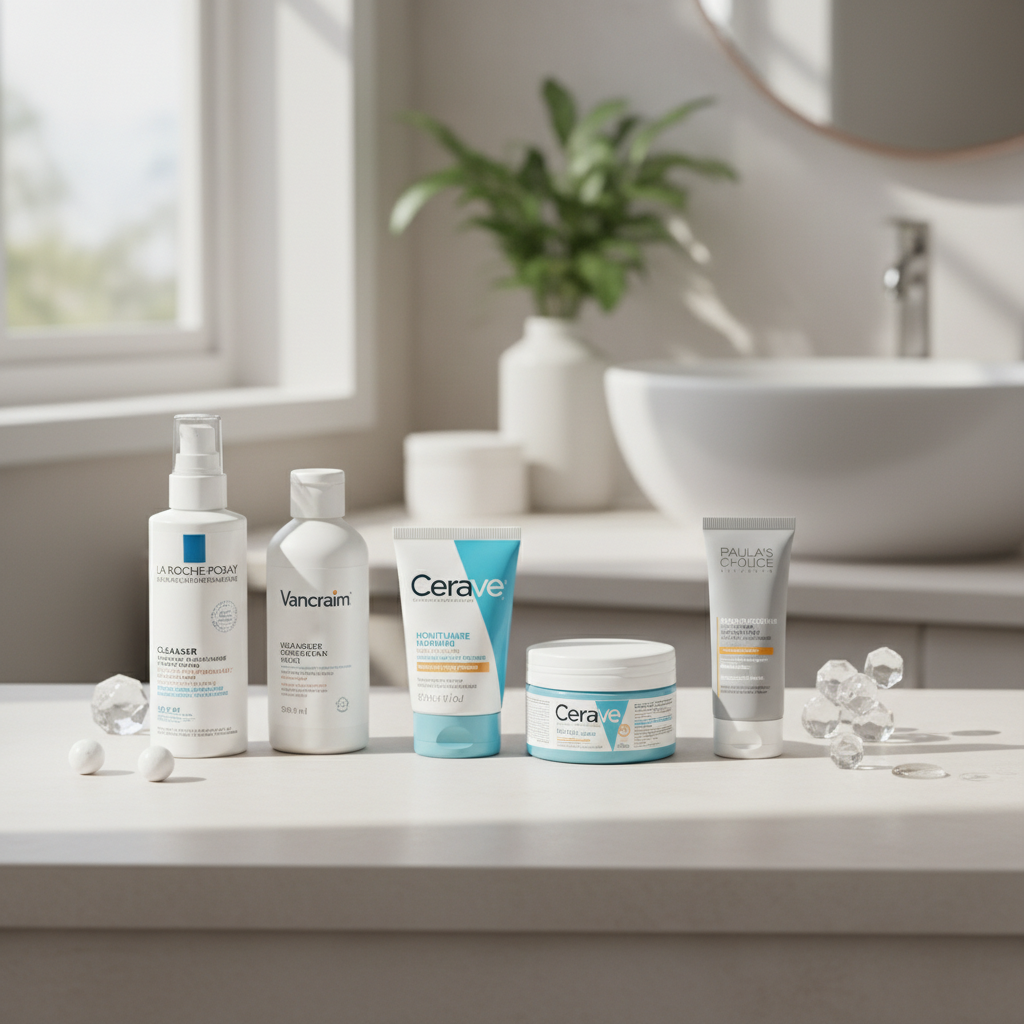
For reactive skin, the best fragrance-free skincare products prioritize gentle, barrier-supporting ingredients like ceramides, niacinamide, and hyaluronic acid, while completely avoiding synthetic and natural fragrances that can trigger irritation. Look for cleansers, moisturizers, and sunscreens specifically formulated for sensitivity from brands like La Roche-Posay, Vanicream, CeraVe, and Paula’s Choice, ensuring your routine calms inflammation and fortifies the skin’s natural defenses.
Introduction
In the evolving landscape of skincare, one truth remains constant: reactive skin demands a gentle, deliberate approach. As we navigate 2026, the focus on skin barrier health and ingredient transparency has never been stronger, making fragrance-free formulations a non-negotiable for anyone prone to redness, itching, or breakouts. This article will guide you through understanding reactive skin, identifying beneficial actives, and building an effective, soothing routine free from unnecessary irritants.
What Makes Skin “Reactive” and Why is Fragrance a Problem?
Reactive skin, often synonymous with sensitive skin, is characterized by an exaggerated response to environmental factors, certain ingredients, or even stress. This can manifest as redness, stinging, burning, itching, tightness, or even small bumps, often indicating a compromised skin barrier. When the barrier is weakened, it struggles to retain moisture and protect against external aggressors, making the skin more vulnerable to irritation.
How Do Fragrances Irritate Reactive Skin?
Both synthetic and natural fragrances are among the most common culprits for skin irritation and allergic reactions. They contain a complex mix of volatile compounds designed to impart scent, many of which can act as sensitizers. Even “natural” fragrances, derived from essential oils like lavender or citrus, can be highly irritating due to their concentrated chemical components. For reactive skin, exposure to these compounds can trigger an inflammatory cascade, exacerbating existing sensitivity or even leading to contact dermatitis. The prevailing dermatologist consensus in 2026 strongly advises against fragranced products for anyone experiencing sensitivity, regardless of whether it’s dry, oily, or combination reactive skin.
Which Key Ingredients Should I Look For in Fragrance-Free Skincare?
When selecting fragrance-free products for reactive skin, the goal is to soothe, protect, and rebuild the skin barrier. Certain ingredients stand out for their proven efficacy and gentle nature.
- Ceramides and Fatty Acids: These are essential lipids naturally found in the skin barrier. Ceramides act like the “mortar” between skin cells, reinforcing the barrier and preventing moisture loss. Fatty acids, such as cholesterol and linoleic acid, are also crucial for barrier integrity. Products rich in these ingredients help to repair and strengthen reactive skin, making it more resilient.
- Niacinamide (Vitamin B3): A powerhouse multi-tasker, niacinamide helps improve skin barrier function, reduce redness and inflammation, minimize pore appearance, and regulate oil production. It’s incredibly well-tolerated by most reactive skin types and is a staple in many dermatologist-recommended routines.
- Hyaluronic Acid and Glycerin: These are humectants, meaning they attract and bind water to the skin, providing intense hydration without feeling heavy or occlusive. Hydrated skin is more supple, less prone to flaking, and better able to function optimally, which is crucial for a compromised barrier.
- Soothing Botanicals: While some botanicals can be irritating, others are known for their calming properties. Ingredients like oat extract (colloidal oatmeal), centella asiatica (Cica), and bisabolol can help reduce redness, soothe irritation, and support the skin’s natural healing process. Always check for fragrance-free versions, as some botanical extracts are also used for scent.
- Mineral Sunscreens (Zinc Oxide, Titanium Dioxide): For reactive skin, mineral sunscreens are generally preferred over chemical filters. Zinc oxide and titanium dioxide sit on the skin’s surface, reflecting UV rays, and are less likely to cause irritation or allergic reactions. Zinc oxide also has mild anti-inflammatory properties.
How Do I Build a Fragrance-Free Skincare Routine for Reactive Skin?
A consistent, gentle routine is paramount for managing reactive skin. Simplicity is key, focusing on cleansing, treating, moisturizing, and protecting.
Cleansing Gently
Start with a mild, hydrating, fragrance-free cleanser. Avoid harsh foaming agents, sulfates, and hot water, which can strip the skin and disrupt its barrier. Opt for creamy, milky, or gel cleansers that rinse clean without leaving the skin feeling tight or dry. In 2026, the trend for “skinimalism” particularly benefits reactive types, advocating for fewer, more effective products.
Targeted Treatments and Actives (Approach with Caution)
While reactive skin needs gentle care, certain actives can be beneficial when introduced slowly and carefully.
- Retinoids (Retinal vs. Retinol): Retinoids are gold standard for anti-aging and acne, but reactive skin requires extra caution. Retinaldehyde (retinal) is a newer generation retinoid gaining traction in 2026, often touted as more potent than retinol but potentially less irritating, as it requires one less conversion step to retinoic acid in the skin. Start with a low concentration (e.g., 0.025% retinol or 0.05% retinal) once or twice a week, gradually increasing frequency as tolerated. Always apply to dry skin after cleansing, and follow with a rich moisturizer.
- Vitamin C (L-Ascorbic Acid): While a powerful antioxidant, high concentrations of L-Ascorbic Acid can be irritating. For reactive skin, look for derivatives like Magnesium Ascorbyl Phosphate or Sodium Ascorbyl Phosphate, or lower concentrations (5-10%) of L-Ascorbic Acid in a stable, fragrance-free formula. Apply in the morning to boost sun protection and brighten.
- Salicylic Acid (BHA) and AHAs (Glycolic, Lactic Acid): These exfoliants can be beneficial for oily or combination reactive skin prone to breakouts or texture issues, but must be used sparingly. Start with very low concentrations (e.g., 0.5-1% BHA, 5% Lactic Acid) once a week. Over-exfoliation is a common trigger for reactivity.
Moisturizing and Barrier Support
A robust, fragrance-free moisturizer is your skin’s best friend. Look for formulas rich in ceramides, fatty acids, cholesterol, and humectants like hyaluronic acid and glycerin. Apply generously morning and night to lock in moisture and reinforce the skin barrier. For very dry or mature reactive skin, consider occlusive ingredients like petrolatum or dimethicone to seal in hydration.
Sun Protection is Non-Negotiable
Daily sun protection is crucial, especially for reactive skin, as UV exposure can worsen inflammation and barrier damage. As mentioned, opt for a broad-spectrum mineral SPF 30 or higher. Apply generously as the last step in your morning routine. The science of sunscreen reapplication in 2026 emphasizes applying every two hours, or more frequently if sweating or swimming, even for those working indoors near windows.
What Are Some Top Fragrance-Free Product Recommendations for Reactive Skin?
Navigating the vast array of products can be daunting. Here’s a comparison of some highly-regarded fragrance-free options, balancing drugstore accessibility with prestige efficacy, all adhering to dermatologist consensus for sensitive skin.
| Product Category | Drugstore Gem (Example Brand) | Prestige Pick (Example Brand) | Key Actives | Best For |
|---|---|---|---|---|
| Cleanser | CeraVe Hydrating Facial Cleanser | Paula’s Choice CALM Nourishing Cleanser | Ceramides, Hyaluronic Acid, Glycerin | All reactive skin types, especially dry/normal. Gently removes impurities without stripping. |
| Moisturizer | Vanicream Moisturizing Cream | La Roche-Posay Toleriane Double Repair Face Moisturizer | Petrolatum, Ceramides, Squalane, Niacinamide | Severely dry, compromised, or eczema-prone reactive skin. Intense hydration and barrier repair. |
| Serum (Niacinamide) | The Ordinary Niacinamide 10% + Zinc 1% | SkinCeuticals Discoloration Defense Serum | Niacinamide, Zinc PCA, Kojic Acid | Reactive skin with redness, uneven tone, or oiliness. Helps calm and refine. |
| Mineral SPF | EltaMD UV Physical Broad-Spectrum SPF 41 | Supergoop! Mineral Sheerscreen SPF 30 | Zinc Oxide, Titanium Dioxide | All reactive skin types needing daily sun protection. Gentle, non-irritating UV defense. |
| Retinoid | Neutrogena Rapid Wrinkle Repair Fragrance-Free Retinol Cream | Medik8 Crystal Retinal 3 | Stabilized Retinol, Retinaldehyde (Retinal) | Reactive skin seeking anti-aging benefits. Start low, go slow. Medik8 offers retinal for potentially less irritation. |
“The most effective skincare routine for reactive skin is often the simplest. Prioritize products that explicitly state ‘fragrance-free’ and ‘for sensitive skin,’ focusing on ingredients that support barrier function rather than aggressive treatments.” – Dermatologist Consensus, 2026
Frequently Asked Questions
Can I use dermal-grade at-home tools if I have reactive skin?
While dermal-grade at-home tools like LED masks or microcurrent devices are popular in 2026, reactive skin types should approach them with caution. Always start with the lowest intensity setting and patch test before full facial application. Consult with a dermatologist to determine if a specific tool is suitable for your skin’s unique sensitivities, as some may exacerbate inflammation or barrier issues.
What’s the difference between “fragrance-free” and “unscented”?
This is a critical distinction for reactive skin. “Fragrance-free” means no fragrance ingredients have been added to the product. “Unscented,” however, often means that fragrance ingredients have been added to mask other odors in the product, making it smell neutral but still containing potential irritants. Always look for “fragrance-free” on the label.
My reactive skin is also oily and acne-prone. Should I still avoid fragrance?
Absolutely. Fragrance can be a significant trigger for inflammation, which can worsen acne and redness, even in oily skin types. Many ingredients designed to treat acne (like salicylic acid or benzoyl peroxide) can also be drying or irritating, so adding fragrance into the mix is counterproductive. Stick to fragrance-free formulas specifically designed for sensitive, acne-prone skin.
How long does it take to see improvement in reactive skin after switching to fragrance-free products?
Improvements can vary. For immediate irritation or redness caused by fragrance, you might see a reduction within a few days to a week. For more systemic barrier repair and overall calming, it can take 4-6 weeks of consistent use. Patience and consistency are key; avoid introducing too many new products at once to properly gauge efficacy.
Are “natural” or “organic” products always safe for reactive skin?
Not necessarily. While often perceived as gentler, “natural” and “organic” labels do not guarantee a product is fragrance-free or non-irritating. Many natural ingredients, such as essential oils (lavender, tea tree, citrus), witch hazel, or certain plant extracts, are potent allergens and irritants for reactive skin. Always scrutinize the ingredient list for potential irritants, regardless of the product’s marketing claims.
Conclusion
For women across the US navigating the complexities of reactive skin in 2026, embracing a fragrance-free skincare regimen is not just a trend, but a foundational principle for skin health. By prioritizing gentle formulations rich in barrier-supporting ingredients like ceramides, niacinamide, and hyaluronic acid, and meticulously avoiding all forms of fragrance, you empower your skin to heal, strengthen, and thrive. Remember, consistency, patience, and an evidence-informed approach are your best allies in achieving a calm, resilient complexion.